
Marine war-risk premiums for West Asian shipping routes, particularly the Red Sea corridor, have surged by as much as 200 per cent due to renewed geopolitical tensions, with some high-risk transits seeing increases of over 1,000 per cent, according to industry brokers.

Brigadier Basant Kumar Ponwar (Retd), a distinguished veteran of the 1971 Indo-Pak War and the visionary behind India's modern jungle warfare strategies against Maoist insurgency, has passed away at 77. His extensive career spanned over five decades, contributing significantly to national defence through both the Indian Army and police forces, including founding the Counter Terrorism and Jungle Warfare College.

Defence Minister Rajnath Singh stated that the "intent of infiltrators" remains unchanged since the 1999 Kargil conflict, but assured that the Indian Army is "fully prepared" to meet any such challenges, emphasising the government's focus on armed forces modernisation.

Despite claims from Congress general secretary Bhupesh Baghel that there are no objections to Amrinder Singh Raja Warring's continuation as Punjab unit president, a significant faction of leaders, including Jalandhar MP Charanjit Singh Channi, are actively pushing for his replacement, citing the need for an 'uncompromised' leader.

A Pune court has granted bail to NCP (SP) office-bearer Mahadev Balgude, ruling that criticism of the government or chief minister does not constitute "waging war" against the nation. The court emphasised every citizen's right to comment on and criticise government actions, noting that the charges under Bharatiya Nyaya Sanhita Section 152 were debatable.

US Vice President JD Vance has accused 'certain elements' within the Israeli government of attempting to manipulate American public opinion to prolong the conflict with Iran 'indefinitely', according to a Wall Street Journal report.

An Argentine war veterans federation has urged football fans to prioritise the World Cup semi-final against England as a sporting event, rather than using it to reignite sovereignty claims over the Falkland/Malvinas Islands. They emphasised diplomacy for territorial disputes and called for respect for fallen soldiers without promoting hatred.

India has successfully evacuated 59 vessels, including 23 Indian-flagged and 36 foreign-flagged ships carrying cargo for India, from the Strait of Hormuz since March 1, 2026, amid fresh attacks and declining shipping traffic, Shipping Minister Sarbananda Sonowal informed the Rajya Sabha.

By taking one of the oldest stories and finding new meaning within it, Christopher Nolan has created the most timely film of his career, asserts Mayur Sanap.

'We thought everything will be back to normal within one month. Now it's four months and still a final solution is miles away.'

Six military personnel, who died in the line of duty during Operation Sindoor last year, have been officially recognised and their names inscribed on a wall at the National War Memorial in New Delhi. This marks the first public release of their names since the operation in May 2025, which was conducted in response to the Pahalgam terror attack.

'It will take a long time to recover from the impact of this war.'

The US Senate passed a resolution directing then-President Donald Trump to withdraw American forces from the conflict with Iran. This bipartisan vote, though largely symbolic as a concurrent resolution, highlighted congressional concerns over potential escalation and a desire to limit presidential military authority without legislative approval.

A lesson for India is to clearly define objectives beforehand, so that the adversary or other parties do not attempt to mitigate them midway.
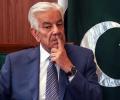
Pakistan's Defence Minister Khawaja Asif has issued a war threat against India, citing water security as a national concern. This comes as Pakistan grapples with a severe internal water crisis, attributed by experts to mismanagement, and India maintains its suspension of the Indus Waters Treaty following a terror attack. Asif accused India of "weaponising water" but admitted to lacking current data on the situation.

US President Donald Trump stated that Iran is eager to make a deal and predicted a sharp decline in oil prices due to abundant supply, amidst a Senate resolution to limit his war powers in Iran.

President Droupadi Murmu will flag off the first Soldierathon on August 2, celebrating the 253-year legacy of the President's Bodyguard, India's senior-most and only Airborne Cavalry Regiment.

The US Central Command (CENTCOM) has launched extensive precision strikes across multiple Iranian military installations, deploying both one-way attack aerial and sea drones for the first time, to degrade Tehran's ability to disrupt international maritime trade in the Strait of Hormuz.

A bipartisan group of US Senators has agreed to fast-track a bill allowing the President to impose sanctions on major purchasers of oil from Russia and Iran. This legislation, known as the Lindsey O. Graham Sanctioning Russia and Iran Act of 2026, aims to restrict funding for Russia's war efforts and Iran's energy and weapons sectors, potentially impacting countries like China and India through tariffs and other restrictions.

US President Donald Trump announced that a peace deal with Iran, which includes a commitment from Iran to abandon nuclear weapons, is nearly complete and expected to be signed in Europe this weekend. This development follows Trump's decision to call off military strikes against Iran hours after threatening to take control of its oil industry.

Christopher Nolan's The Odyssey masterfully reinterprets the legendary figure of Odysseus, presenting him as a multifaceted hero grappling with the horrors of war, the responsibilities of leadership, and an enduring longing for home.

'I was fortunate enough to be associated with two of the most important battles fought by the Indian Army, the Battle of Tololing and Battle of Tiger Hill.' 'Sometimes, I think how I survived those battles on Tololing and on Tiger Hill.'

The US Central Command announced a new wave of strikes against Iranian military infrastructure, aiming to degrade Tehran's ability to threaten civilian mariners and commercial vessels. This comes as US President Donald Trump described the situation as a 'skirmish' and suggested Iran wants to 'make a deal,' while Iran's Foreign Minister warned of a 'decisive response' to any aggression.

Ahead of Spider-Man: Brand New Day, we rank every live-action Spider-Man movie from the critically acclaimed Spider-Man 2 to the less successful The Amazing Spider-Man 2.

Defence Minister Rajnath Singh on Sunday slammed Pakistan for making terrorism a "part of its state policy", and said there will be no talks with the country other than on Pakistan-Occupied-Kashmir, which is a "part of India illegally occupied" by it.

More than a quarter of a century after Indian Army soldier Avnish Yadav laid down his life in the Kargil War defending the nation, his family said that several promises made by the authorities in recognition of his sacrifice are yet to be fulfilled.

An underwhelming thriller that never quite hits a home run, despite a solid John Krasinski doing his best, observes Mayur Sanap.

Lots of interesting films coming up in theatre this August, and the entertainment at home is just as good!

From losing his father to terrorism and watching conflict tear apart his family, to nearly abandoning football before leading Iraq back to the World Cup, Aymen Hussein has overcome obstacles that would have broken many others.

A Kargil War Hero looks back at the victory of Tiger Hill and the men who didn't return.

Malaysia's Sepang circuit will host the rescheduled 'Gulf Air Bahrain Grand Prix in Malaysia' on October 4, Formula One announced, stepping in after the original April races in Bahrain and Saudi Arabia were cancelled due to the Iran war and Middle East situation.

Former Italy international Andrea Pirlo has withdrawn from contention for the national team's head coach position after his commercial ties to Russian betting company Fonbet drew significant criticism and opposition from Italian football officials and lawmakers.

The harsh truth is that the US is no longer a reliable partner, cautions Ramesh Menon.

Five-time world chess champion Viswanathan Anand has been appointed interim president of the world chess body FIDE. This follows the stepping aside of incumbent president Arkady Dvorkovich, who was included in the European Union's sanctions list due to the Russia-Ukraine war. Dvorkovich plans to challenge the sanctions, which he deems unfair.

Despite decades of efforts towards energy transition, oil will remain the critical energy source for all nations for some decades. We can hope for peace opening the Strait of Hormuz, but must prepare for war closing it, points out former foreign secretary Ranjan Mathai.
'We caught General Pervez Musharraf talking over the phone with his Chief of General Staff Lieutenant General Mohammad Aziz. Musharraf was visiting China; Aziz was in Rawalpindi.'

Forty-six militants of the banned Kangleipak Communist Party (People's War Group) surrendered before security forces in Manipur on Tuesday, the police said.
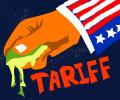
The bill, introduced on Thursday, was conceived by Democrat Senator Richard Blumenthal and late Republican Senator Lindsey Graham and has the support of over 60 lawmakers.

Crude oil futures surged over 3 per cent, snapping a three-session losing streak, as renewed military escalation in West Asia revived fears of supply disruptions, driving prices higher on both domestic and international exchanges.

US President Donald Trump and Israeli Prime Minister Benjamin Netanyahu had a tense phone call over the future course of the war on Iran, with Washington favouring a deal instead of resuming strikes, according to US media reports.
